
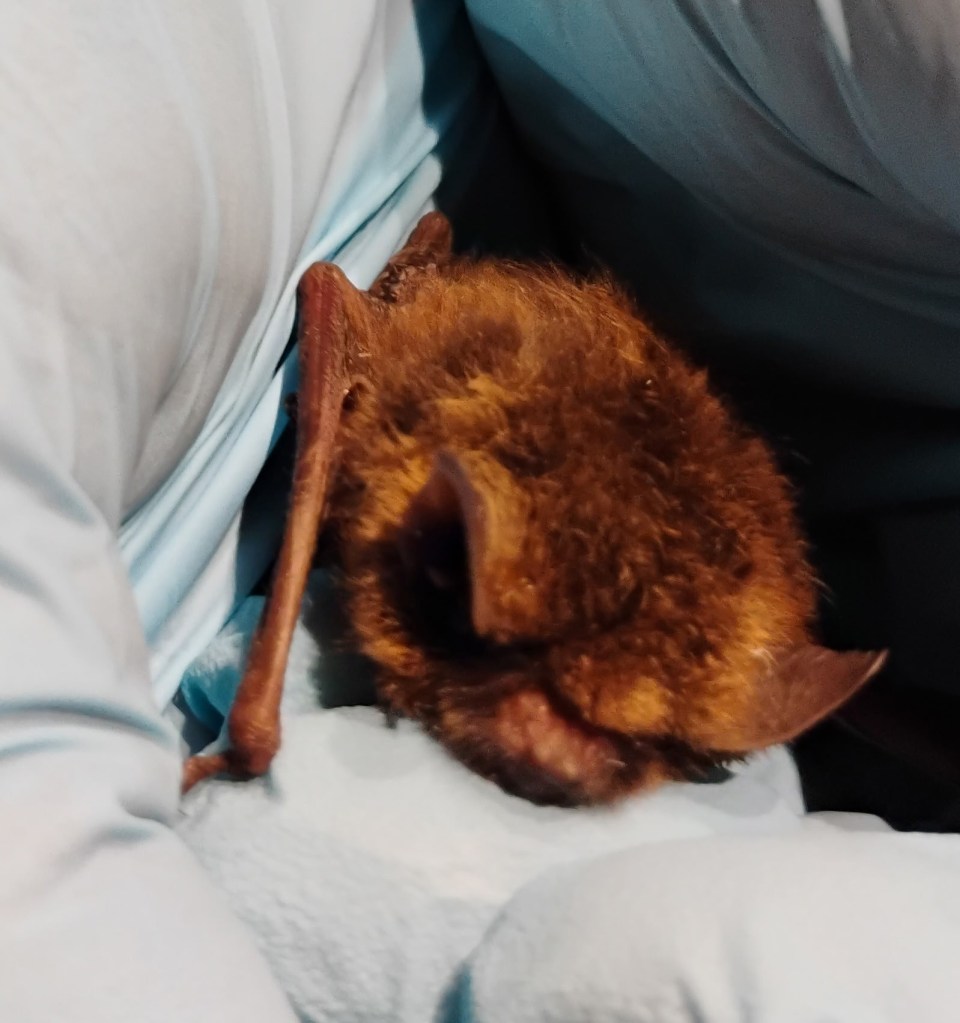
I had wrestled with whether to attend the program on bats at Seven Islands. It was a night program which almost always means that I’ll be up later than my usual bedtime. I had the Tennessee Naturalist Program on Invertebrates scheduled for 8:00am the next morning. I had already done one night time program on Wednesday night. There were all kinds of good, sound reasons why I could have passed on this one and not felt bad for having done so. I’m so glad that I didn’t.
Bats are one of those creatures that folks find either frightening or fascinating. Lots of folklore says that they are not to be trusted. They have all kinds of weird behaviors. They will bite you and suck your blood. They will give you rabies or some other fateful disease. It seems throughout the world there are stories and myths about these creatures that, even if not intended to, will scare folks.
But bats are also so unique. They are flying mammals that give live birth. In fact, during the program we got to see that process on a video. They are furry. They have ‘hands’ that have become wings so that they can fly. They have incredible senses of hearing so that they can use echolocation to find the bugs that they eat.
And boy do they eat a lot of bugs. Bats are incredibly useful for agriculture by being effective natural pesticide. They consume incredible numbers of insects in a night; a lactating mother bat might consume twice its body weight in a single night. They don’t require special chemicals or equipment to do so! They are fulfilling a valuable role for us both ecologically, environmentally, and economically.
Susan Kapler of Bat Education and Rehabilitation of Grainger County, Tennessee, gave an excellent presentation on bats in the Blue Bird Barn [She even had an education bat with her that was a small and delightful little creature.] She is obviously passionate about her work with these misunderstood and underappreciated (generally) creatures. We learned a lot about the species that we might encounter later in the evening.
With the sun sinking down and the dusk falling around us we headed down to the bridge for outside observations. We were fortunate to have several bats swooping and diving and even hitting the top of the river. It was fun to try to spy them in the darkening sky.
One of the tools for the person looking for bats is an echometer. This device attaches to a smartphone and listens for the frequency and intervals between calls. It also has software that identifies the bats that are producing the calls. We were delighted to hear several different species of bats that were flying and feeding all around us. It was so cool to be able to connect with them in this way. As with many things in the night, it takes some special instruments and awareness to capture some of what it happening. The class was enthralled with our discoveries.
The moon was fairly bright and the return walk to the Blue Bird Barn was enjoyable. I was so glad that I had made the decision to participate and spend time with these marvelous flying mammals.
There are other opporunities that are upcoming to explore more about the lives of bats. At Seven Islands State Birding Park there will be a Bat Hike on August 28, 7:30pm-9:30pm—this will take place on National Bat Night. See the park’s website for more details and to register.
There will be a showing of The Invisible Mammal, a documentary film, on August 27, 7:30pm, at the Bijou Theater on Gay Street in Knoxville, Tennessee. Admission is free and donations will be appreciated.


Les, we enjoy hearing about your adventures and all of the opportunities there are out there to see and learn neat stuff!! I can’t believe the mother bats eat twice their weight in bugs! Good grief! It’s also cool you got to see a live bat up close. Blog on!!
LikeLike
Great story! I’m going to see if we can get an echometer for here at the Girl Scout camp. We have bats, and that would make for a good program.
LikeLike